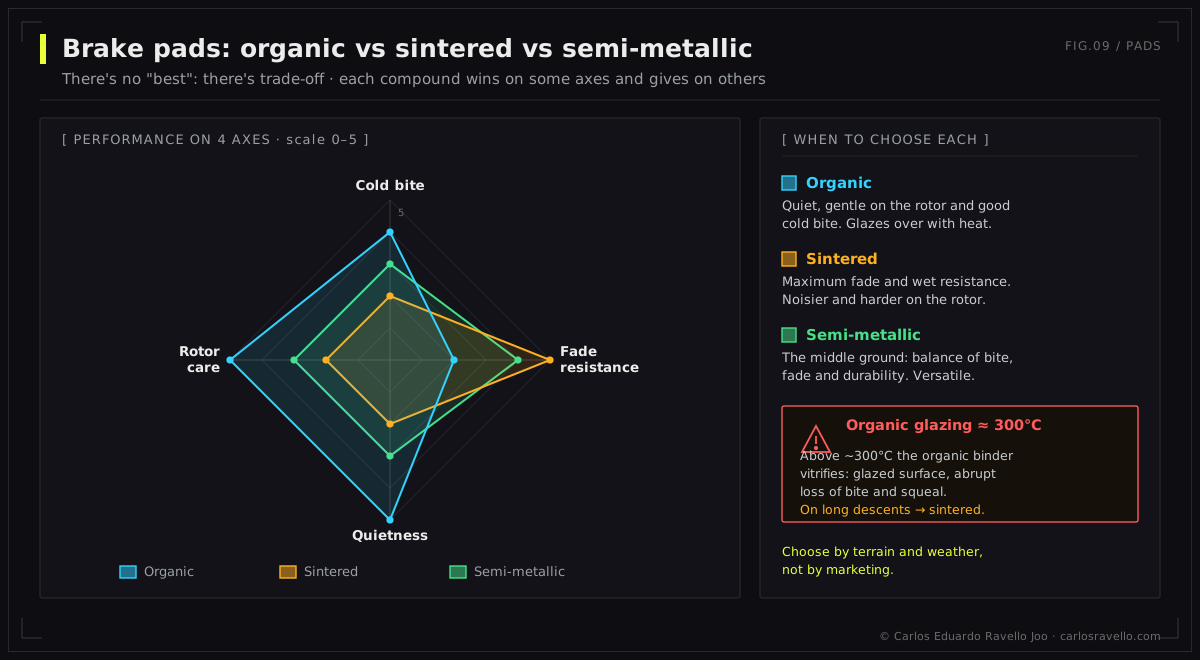
The pad defines how it bites; the rotor defines how much torque and how much heat you can take. Organic: cold bite and quiet, but glazes (~300°C) and lasts less → dry trail/city. Sintered (metallic): resists heat and water, lasts longer → downhill, rain, mud. Rotor diameter rules long descents: going from 160 to 203 mm raises torque ≈27% and dissipates more heat, preventing fade. Choose the compound+diameter pair for your discipline, not by default.
The friction-and-dissipation chapter of the Hydraulic Brake Encyclopedia. The fluid and pistons clamp; but what turns that clamp into braking —and into heat— is the pad and the rotor. This is where a descent is won or lost.
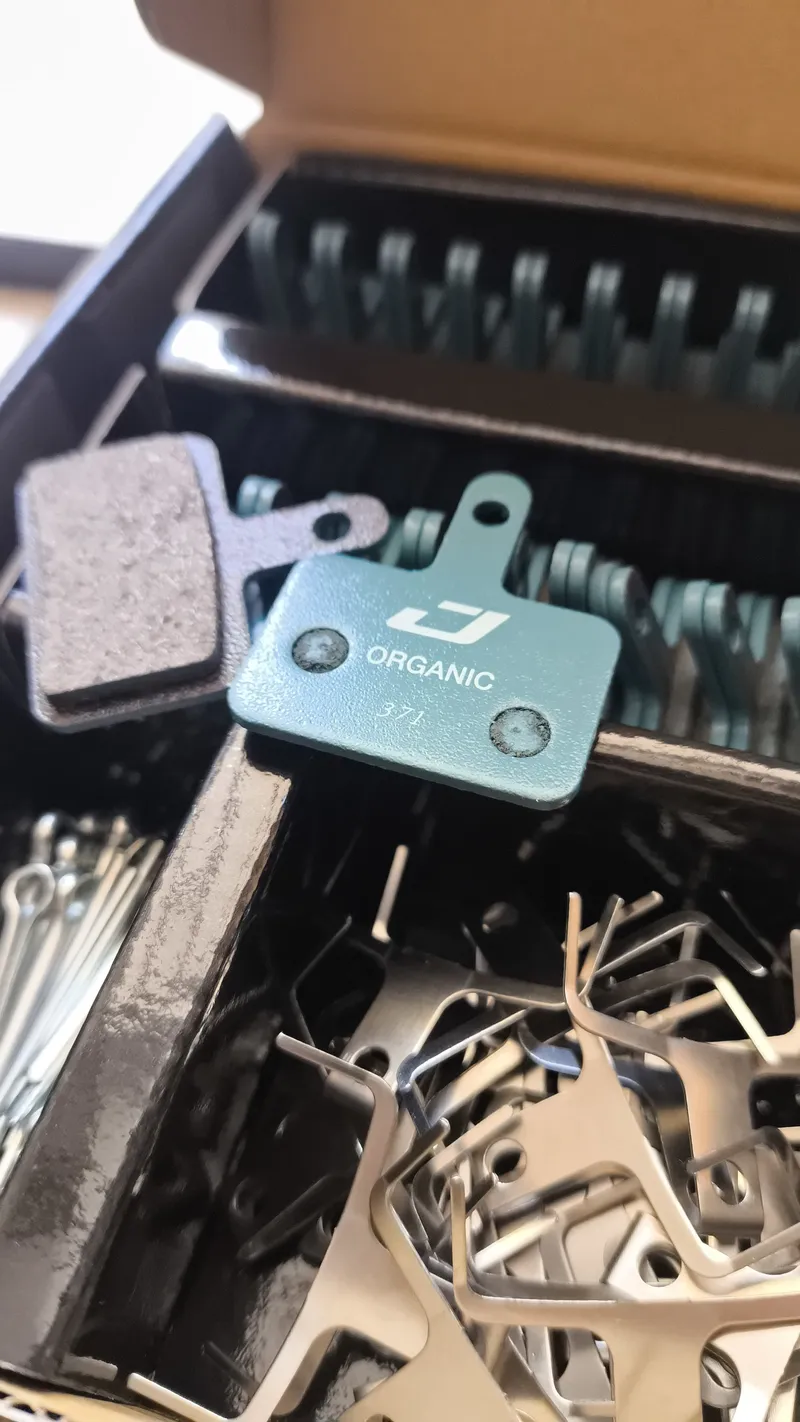
Pad compounds: organic, sintered, semi-metallic
| Compound | Cold bite | Heat resistance | Lifespan | Noise | Ideal for |
|---|---|---|---|---|---|
| Organic (resin) | High | Low (glazes ~300°C) | Lower | Low | Dry trail, city, XC |
| Sintered (metallic) | Weaker cold | High | Higher | Higher | DH, enduro, rain, mud |
| Semi-metallic | Medium | Medium-high | Medium | Medium | All-mountain, mixed use |
The temperature window: why a pad glazes
Each compound has a useful temperature window. Below it, weak bite; above it, degradation. Organic delivers a lot when cold but, above ~300°C of sustained braking, its resin vitrifies: glazing appears, a hard shiny layer that lowers the friction coefficient and squeals. Sintered has a higher window, which is why it survives descents where organic has already "given up".
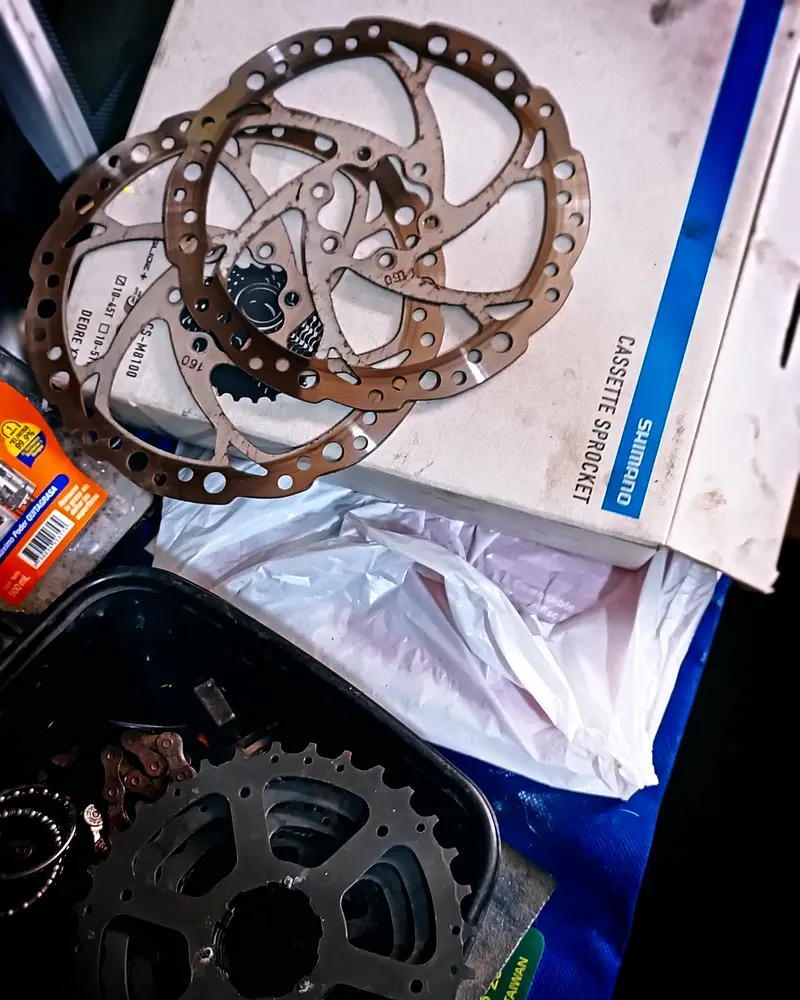
A new pad needs bedding-in: 15-20 progressive mid-speed brakes without coming to a full stop, to transfer an even layer of material onto the rotor. Skipping bedding causes poor bite and premature glazing. And never touch the friction surface with greasy fingers.
The rotor: diameter, torque and heat
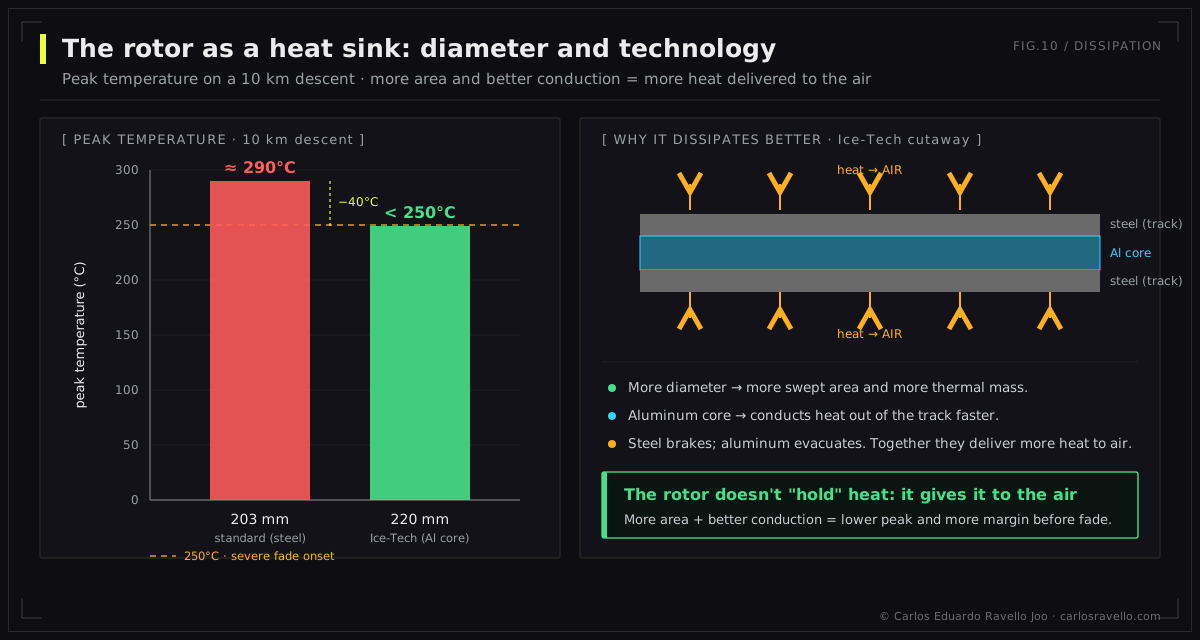
Braking torque is force × radius. With the same caliper force, a larger rotor multiplies torque because it acts with more leverage. Going from 160 to 203 mm raises torque by about 27%. But the real mountain benefit is thermal: more diameter = more mass and more surface to absorb and radiate heat, keeping the system well away from the fade threshold.
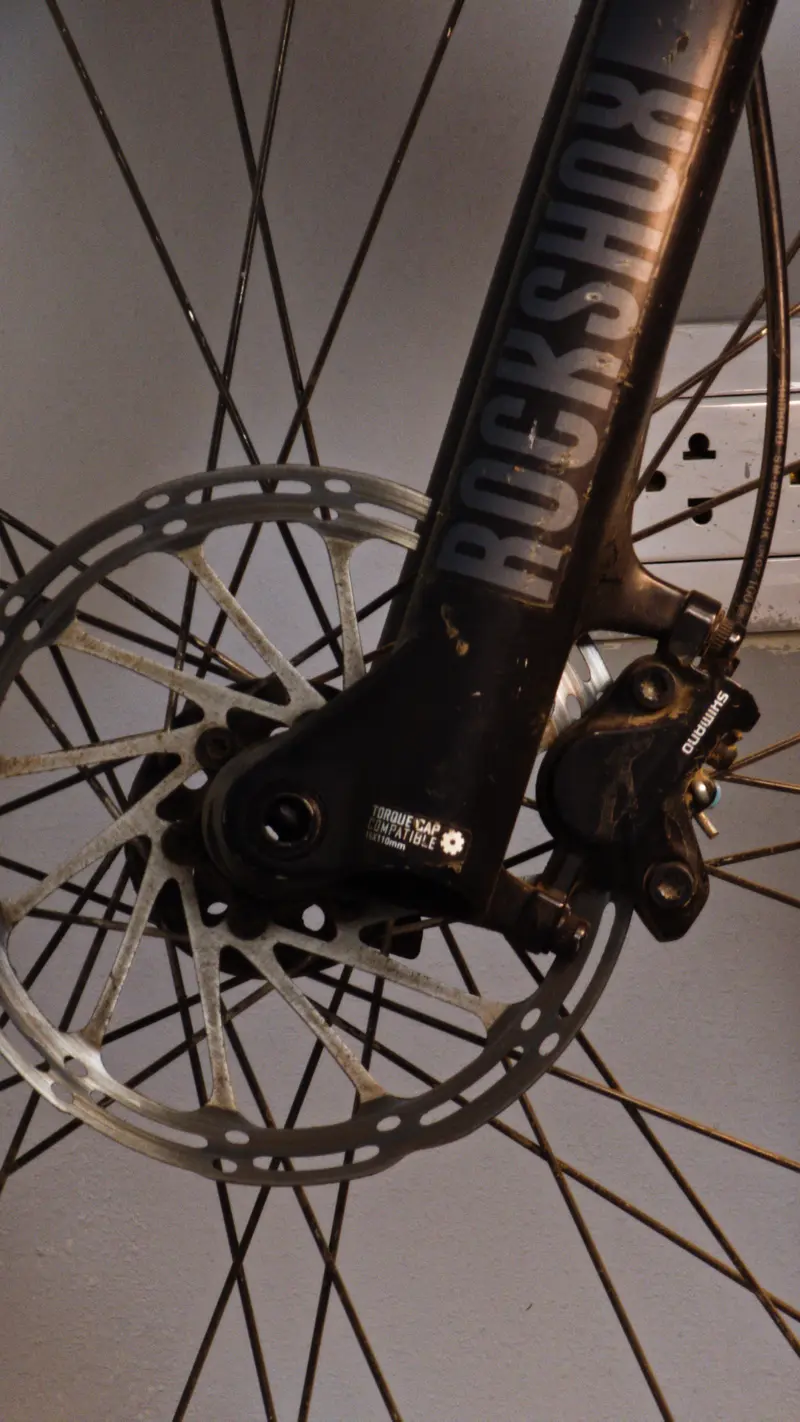

Which diameter to choose
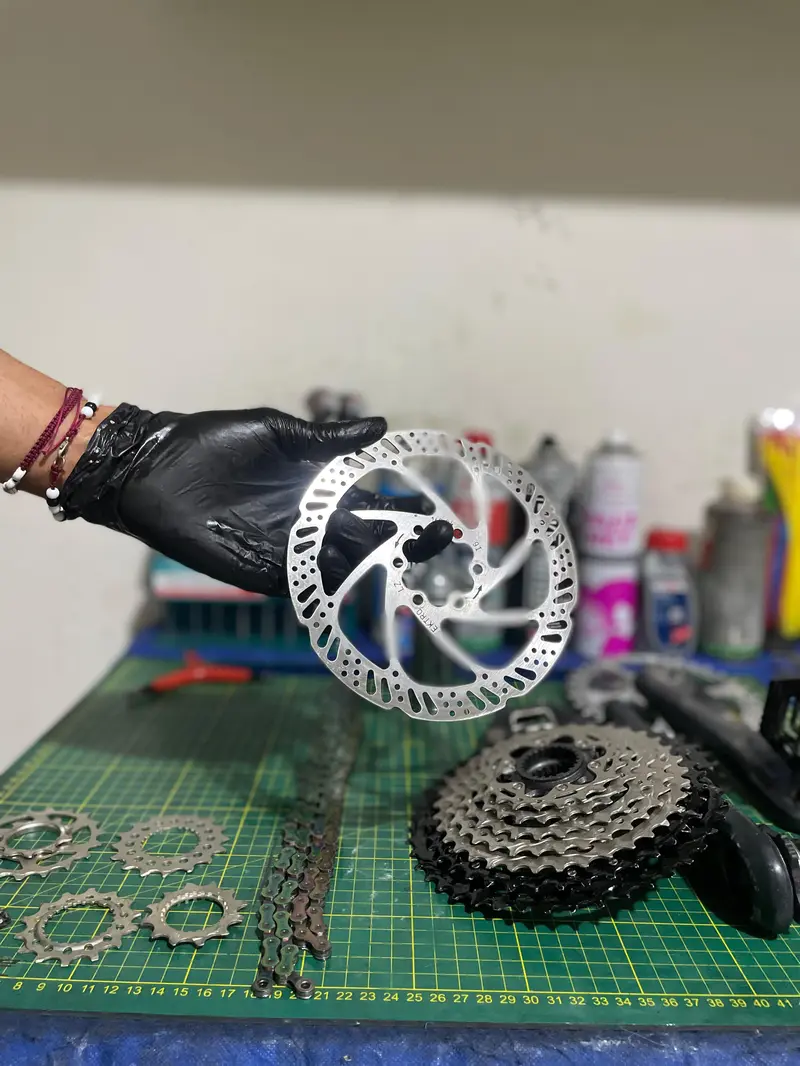
160 mm: Light XC, light rider, smooth terrain. 180 mm: trail, all-mountain, the most common balance. 200-203 mm: enduro, heavy rider, descents. 220 mm: DH, bikepark, maximum dissipation. Technologies like Ice-Tech (aluminum core) lower disc temperature by several tens of degrees compared to a standard rotor of the same size.
Maintenance and contamination
Replace pads when friction material drops below ~1 mm; rotors when below their stamped minimum thickness (typically 1.5 mm), warped or grooved. Oil-contaminated pads can't be recovered: oil penetrates the porous material, so replace them (and clean the rotor with a specific degreaser). A greasy disc is the most common cause of a "brake that won't bite" after maintenance.
BikeLab Studio.
Frequently Asked Questions
Organic or sintered brake pads?
Organic: cold bite, quiet, good modulation, but wear fast and glaze under heat → dry trail/city. Sintered: handle heat and water, last longer, resist glazing, at the cost of noise and weaker cold bite → downhill, rain, mud. Semi-metallic: the middle ground.
What is glazing and how do I avoid it?
A glassy layer formed when an organic compound overheats (~300°C): the pad loses bite and squeals. Avoid it with proper bedding, not dragging the brakes, using the right compound and a rotor that dissipates. It can sometimes be recovered by sanding the surface.
How much more power does a 203 vs 160 mm rotor give?
Torque grows with radius: 160 to 203 mm raises it ≈27% for the same caliper force, and the larger disc dissipates more heat, resisting fade. That's why DH/enduro use 200-220 mm and light XC 160-180 mm.
Why does a larger rotor brake better on long descents?
Because there the problem is accumulated heat, not peak force. More diameter = more mass and surface to absorb and radiate energy, keeping temperature below the fade and glazing thresholds. Ice-Tech lowers it further.
How often should pads and rotors be replaced?
Pads: when material drops below ~1 mm (or if they glaze or get oil-contaminated). Rotors: when below the stamped minimum (~1.5 mm), warped or grooved. Oil-contaminated pads can't be recovered: replace them.
References
- Shimano — Ice-Tech rotor technology and pad compounds (resin vs metallic).
- SRAM / Galfer / SwissStop — compound and bedding-in guides.
- Park Tool — pad and rotor wear; minimum thickness.
- BikeLab Studio — Brake Encyclopedia (energy, torque and fade).