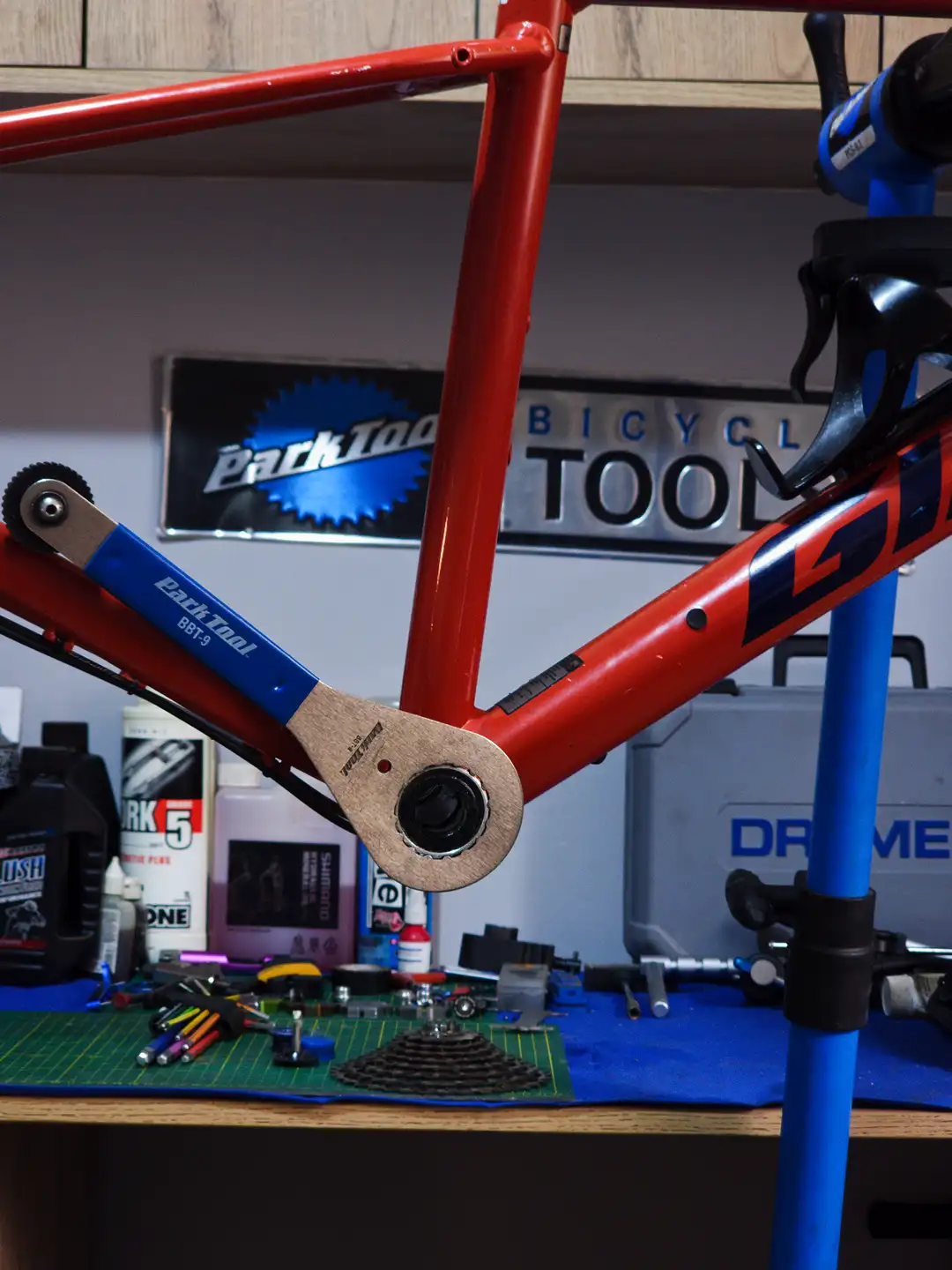
A bottom bracket creak almost never is the bottom bracket: seated it's usually the seatpost; standing, the frame propagates the noise and the real source is often pedals, cleats, chainrings or the rear hub. Diagnose by elimination. At the BB: threaded = clean and grease/anti-seize to ~35 N·m; press-fit = no grease, use a retaining compound (Loctite 609/641/480) and, on carbon, an activator. Tightening harder doesn't silence: it breaks.
Few noises are as maddening as the creak that shows up under hard pedaling. And few are diagnosed as badly: most people pull the bottom bracket three times, it still creaks, and nobody explained that the whole frame works as a resonance box. This guide separates the real physics of the creak from the shop myth, with the elimination procedure and the right chemistry for each BB type.
1. The real culprit: is it actually the bottom bracket?
Before touching anything, pin down when it creaks. It's the most valuable clue.
If it creaks seated, pedaling easy, the seatpost is very likely: the post–frame interface micro-slips under your weight. If it creaks standing, under torque, the frame twists laterally and the sound travels through the hollow tubes; that's where the false culprits come in.
Before the bottom bracket: dry pedal threads (grease them), cleats and the shoe–pedal interface, chainring bolts, the seatpost, headset/stem, and the rear hub (swap in a test wheel and if the noise goes, it was the wheel). The bottom bracket is checked last.
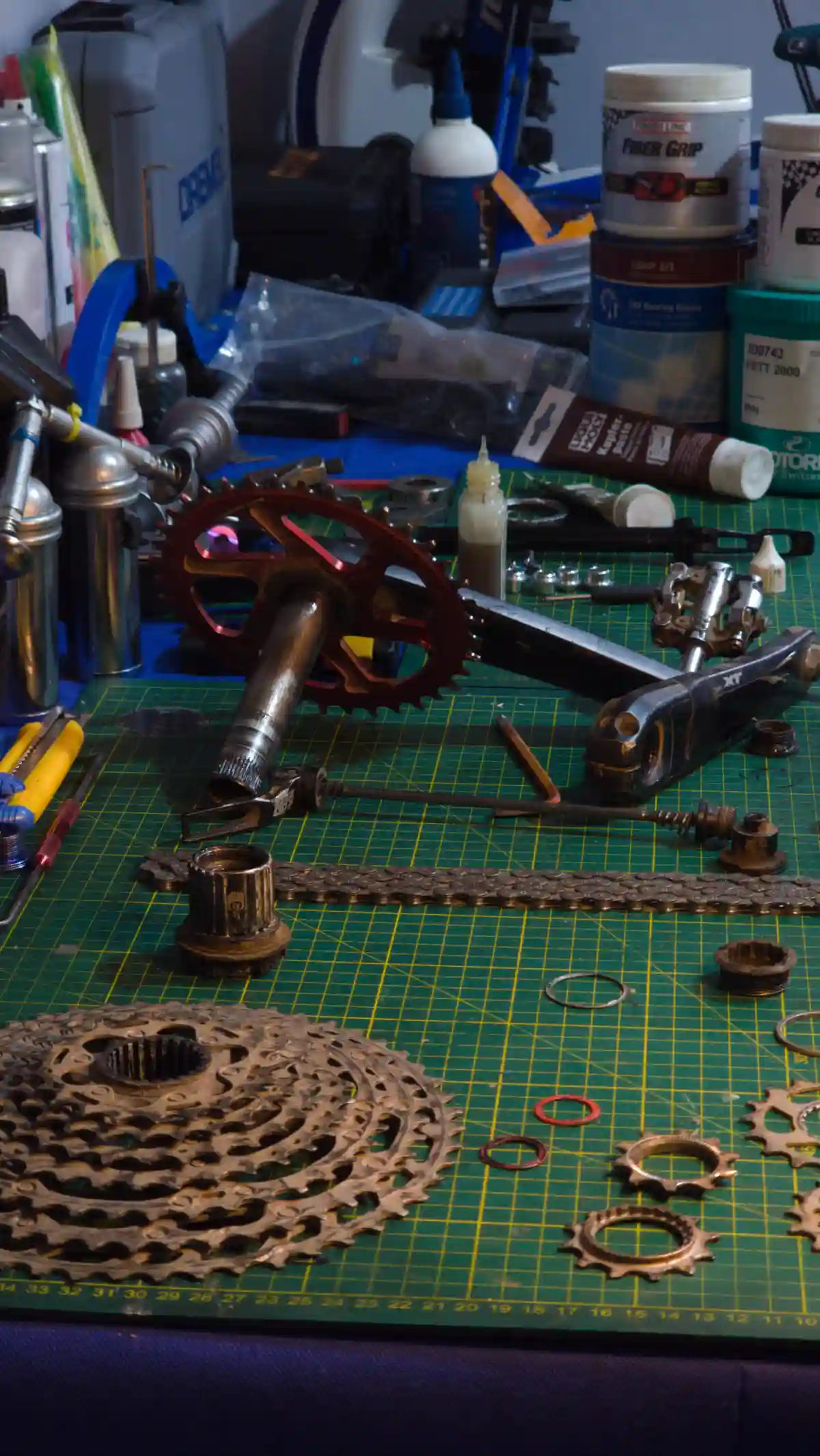
2. Press-fit vs. threaded: why it matters for noise
There are two BB families and they creak for different reasons. Threaded (BSA, ITA, T47) screws the cups into the frame: if it creaks, it's almost always dry threads or insufficient torque. Press-fit (BB30, PF30, BB86/BB92) presses the cups in: if it creaks, it's frame tolerance —an oval, non-perpendicular or oversized shell— that lets the cup micro-move.
| Standard | Type | Shell bore | Notes |
|---|---|---|---|
| BSA (English) | Threaded 1.37"×24T | 34.8 mm | Easiest to keep silent |
| T47 | Threaded | 47 mm | Modern threaded for 30 mm axles |
| BB30 / PF30 | Press-fit | 42 mm | Very tight tolerance; creak-sensitive |
| BB86 / BB92 | Press-fit | 41 mm | Resin/alloy cups pressed in |
Let's dismantle the myth: press-fit isn't "garbage." The creak doesn't come from the concept but from the frame's manufacturing precision. With correct tolerances, a press-fit is as silent as a threaded one; with a poorly machined shell, no system is safe.
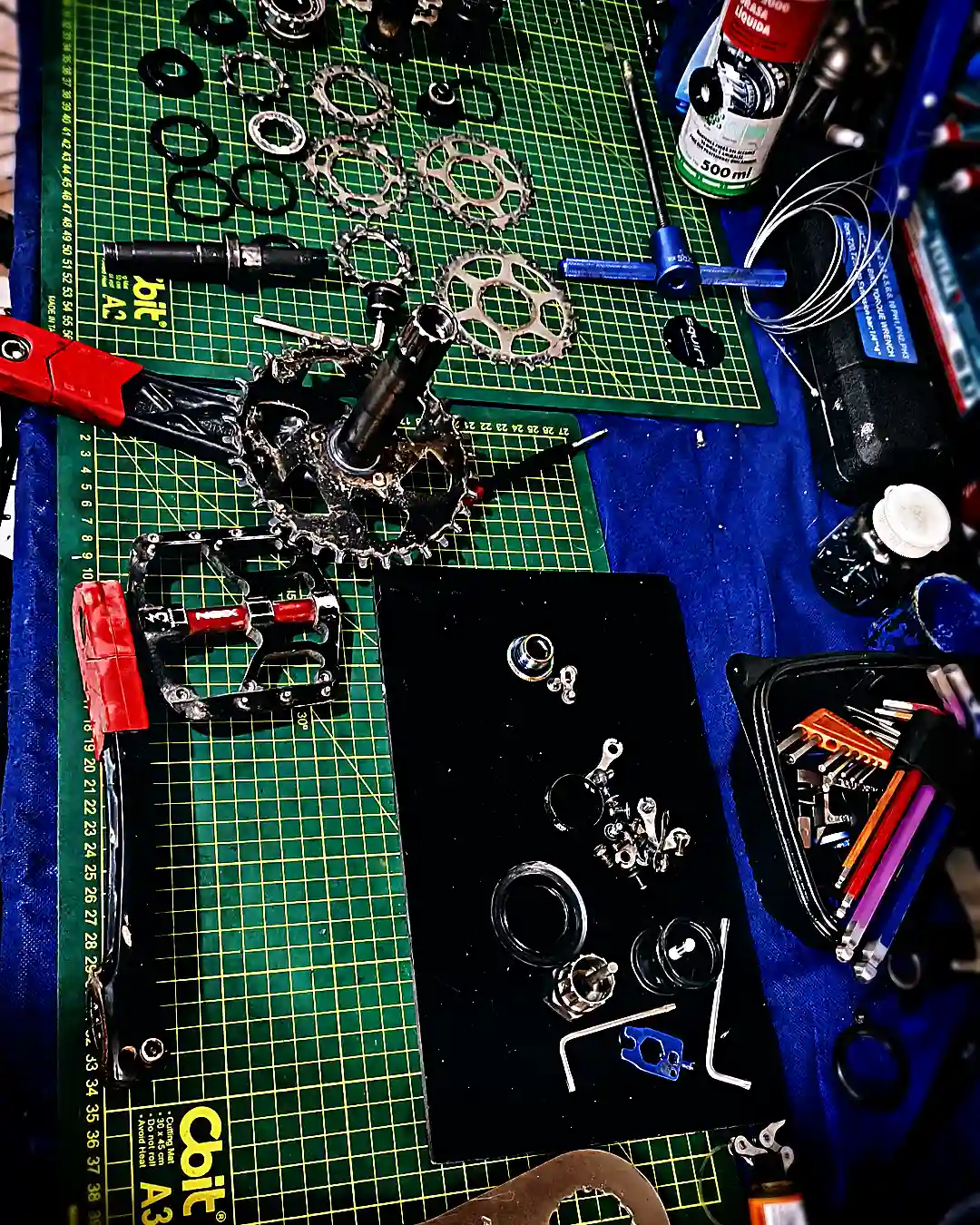
3. The physics of the creak: micro-movement vs. bearing
Here is the distinction almost no guide makes, and it decides the fix. There are two different creaks:
Micro-movement (fretting). Two contacting surfaces that slide a few microns under load and return: the cup against the frame, a loose thread, the chainring against the spider. It produces a dry click under torque and disappears when the load is removed. The cure isn't to lubricate the movement —that perpetuates it— but to lock it.
Bearing failure. The cartridge has pitting or contamination: it spins rough, notchy, usually with play. No compound helps here: it's replaced.
Greasing a press-fit that moves. Grease reduces the friction of the micro-slip, enables fretting and wears the carbon or aluminum bore. After a few rides the grease migrates, air gets in and the creak returns worse. A press-fit that creaks = retaining compound, not grease.
4. Step-by-step diagnosis (by elimination)
Seated or standing?
Seated → suspect the seatpost first. Standing → BB or false culprits. This single observation saves hours.
Pedals and cleats
Remove the pedals, clean and grease the threads, check cleats and bolts. It's the most common and cheapest cause.
Chainrings and headset
Check chainring bolt torque and the spider interface; check headset and stem.
Rear wheel (hub)
Mount another wheel and ride standing. If the creak goes away, it was the hub, not the bottom bracket.
The bottom bracket, last
Only now remove cranks and cups. Spin the bearing with your finger: rough = replace; smooth = it's interface micro-movement.
5. The right fix by system
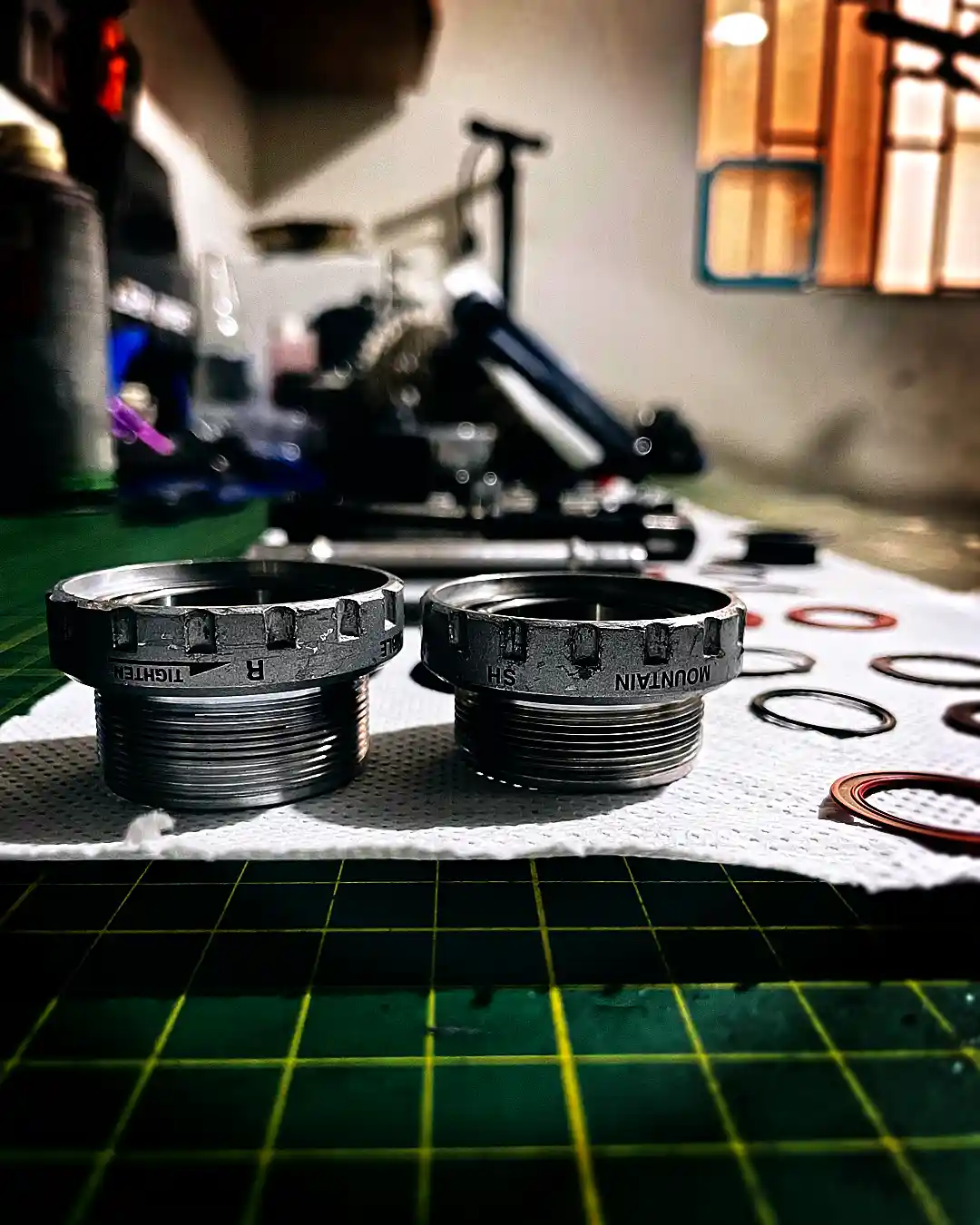
Absolute cleaning first: degrease threads or bore with isopropyl alcohol until dry. Then the correct compound.
Threaded (BSA/ITA/T47): grease or anti-seize on the thread; on titanium, anti-seize is mandatory. Press-fit BB30 (metal-to-metal): Loctite 609 (retaining, fills up to ~0.13 mm). Serviceable press-fit / composite cups (PF30/BB86): Loctite 641 or 480. Carbon frame: carbon is inert; the anaerobic needs an activator/primer (e.g. 7649) to cure. Robust alternative: thread-together cups or shims if the shell is oversized.
6. Real torque values
| Component | Torque | Note |
|---|---|---|
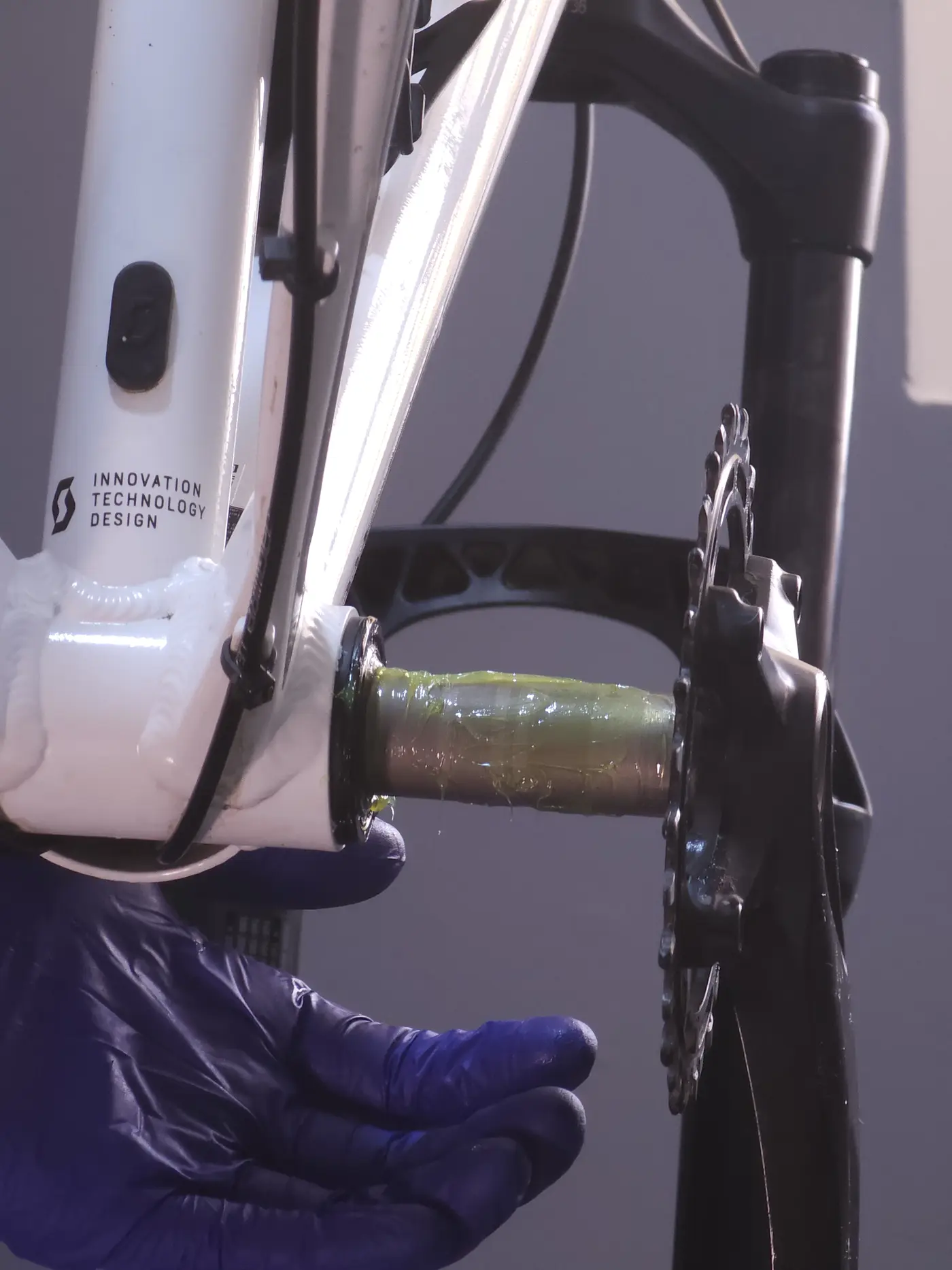
| Threaded cups (BSA/T47) | 35–50 N·m | To spec, no more |
| Crank preload (dial/washer) | 1–2 N·m | Only remove lateral play |
| Crank pinch bolts | 12–14 N·m | Shimano Hollowtech |
| Chainring bolts | Per maker | Clean and apply medium threadlocker |
Over-tightening the preload loads angular bearings axially and destroys them by friction. The preload dial only removes play; the real torque is carried by the cups. Tightening harder doesn't silence: it ruins.
BikeLab Studio.
Frequently Asked Questions
Is a creak while pedaling always the bottom bracket?
No. If it creaks mostly seated, the seatpost is the likeliest culprit. Standing, the frame twists and propagates the sound; in many cases the real source is dry pedal threads, cleats, chainring bolts or the rear hub. The bottom bracket is checked last, by elimination.
Should I grease a press-fit bottom bracket so it doesn't creak?
Not on press-fit. Grease lubricates the micro-movement of the cup and over time accelerates fretting and brings the creak back. Press-fit uses a retaining compound (Loctite 609 metal-to-metal, 641 serviceable, 480 with composite cups); on carbon you need an activator. Grease or anti-seize is for threads (BSA/T47).
Does tightening harder eliminate the creak?
No, and it usually damages. Threaded cups go to their torque (~35–50 N·m), no more. The crank preload only removes lateral play with very little torque (1–2 N·m); over-tightening loads the bearings axially and destroys them. Tightening harder doesn't silence: it breaks.
Is press-fit a bad design that always creaks?
Not necessarily. The creak doesn't come from the system but from frame tolerance: an oval, non-perpendicular or oversized shell allows micro-movement. With correct tolerances, the right compound and, if needed, thread-together cups or shims, a press-fit can be as silent as a threaded one.
How do I tell whether the cup or the bearing is creaking?
Remove the cranks and spin the bearing: rough or notchy = damaged cartridge, replace it. If it spins smooth but the bike creaks under real load, the cup is moving inside the frame: the fix is a retaining compound or correcting the tolerance, not a new bearing.
References
- Park Tool — Troubleshooting a Noisy Drivetrain.
- Hambini Engineering — Bottom bracket press-fit and creaking: tolerance analysis; grease vs. retaining compound.
- Fit Werx / BBInfinite — Non-perpendicular/oval shell causes; Loctite 609 and radial compression.
- Henkel Loctite — Technical data 609 / 641 / 480 and activator 7649 (retaining and curing on inert substrates).
- BB standards (BSA 1.37"×24T, T47, BB30 42 mm, BB86/BB92 41 mm) and manufacturer torque values (Shimano, SRAM).