Freehub body
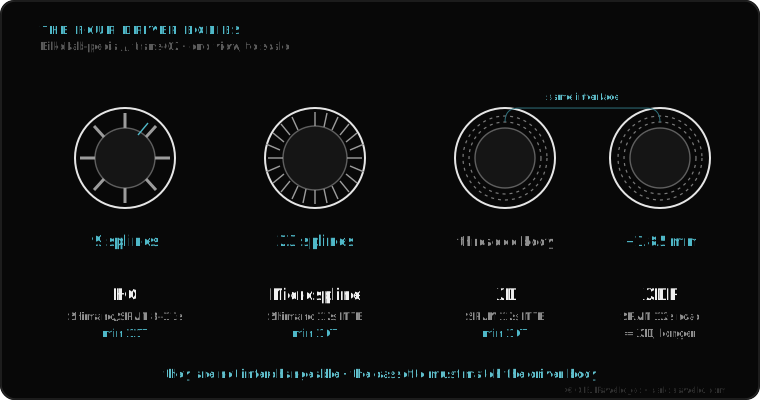
The freehub body is the cylinder on the rear wheel where the cassette mounts. Inside it carries the freewheel mechanism (the pawls that click and let you coast). Its outer interface defines which cassette fits: there are four main standards —HG, Microspline, XD and XDR— and they're not interchangeable. Switching between them usually means replacing the freehub body, not the whole wheel.
It's the invisible part that decides half of your drivetrain compatibility. Understand your freehub and you know which cassettes you can run.
What it is and how it works
The freehub bolts or slots onto the hub. Outside it has splines (HG, Microspline) or a thread (XD/XDR) that hold the cassette. Inside, pawls or a ratchet ring transfer your pedaling to the wheel and spin free when you stop (the «buzzing» sound). More engagement points = more immediate pickup. On many hubs the freehub is a replaceable part, so you can change standards without buying a new wheel.
The four standards
What it fits
Each cassette only mounts on its freehub. An HG cassette goes on an HG body; a Shimano 12-speed MTB needs Microspline; a SRAM Eagle needs XD; a modern SRAM road, XDR. The good part: brands like DT Swiss, Hope or Mavic sell the freehub body separately, so migrating HG to Microspline or XD is often just swapping that part.
If you're unsure which cassette, freehub or chain fits your bike, send us the case. Real diagnosis, nothing to sell you. Message us on WhatsApp
Frequently asked questions
Can I swap just the freehub?
On many quality hubs, yes: the freehub body is removable and sold separately, letting you migrate HG to Microspline or XD without a new wheel.
Why does my wheel «click» when coasting?
That's the freehub's freewheel: pawls skip over a ratchet ring when you stop pedaling. Louder isn't better or worse, just design.
Are HG, XD and Microspline compatible?
No. They're different geometries. One's cassette won't physically mount on another's freehub.