Rotor size
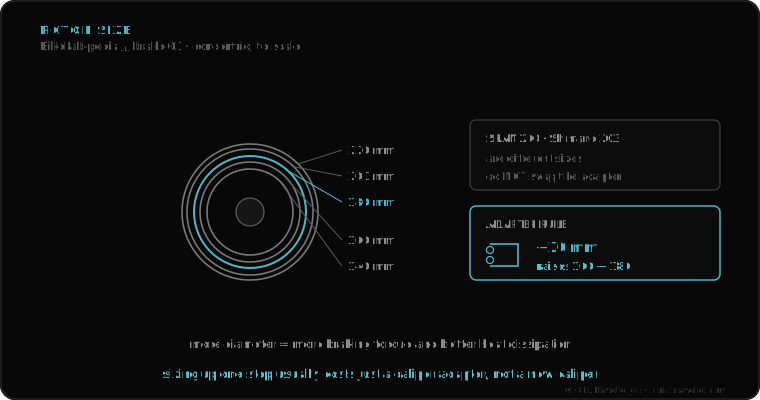
Rotor size is its diameter, and it scales the brake's power and heat dissipation. Standard sizes: 140, 160, 180, 200, 203 and 220 mm. Bigger = more leverage (more braking for the same lever force) and more surface to avoid overheating. Watch a trap: SRAM uses 200 mm and Shimano uses 203 mm, and the adapter isn't interchangeable. To go larger with the same caliper you use an adapter (+20 mm = 160→180).
Sizing up the rotor is the cheapest brake upgrade: more power and less fade without changing the caliper. But you must respect the frame maximum.
What changes and the SRAM/Shimano trap
Going from 160 to 203 mm raises braking torque by 25–30 % without touching the lever, and adds mass to dissipate heat on long descents. But one detail ruins setups: SRAM standardized 200 mm and Shimano 203 mm. A 203 adapter with a 200 rotor (or vice versa) leaves the caliper misaligned, biting the edge. Respect your adapter's brand.
Key data
What it fits
The rotor must respect the maximum size your frame and fork maker specifies (fitting 203 on a frame rated for 160 can fracture it). The caliper adapts to the size with the right adapter, respecting the brand (SRAM 200 / Shimano 203). The hub mounting (6-bolt or Center Lock) doesn't change with size.
If you don't know which mount, rotor or fluid your brake uses, send us the case. Real diagnosis, nothing to sell you. Message us on WhatsApp
Frequently asked questions
Why does SRAM use 200 mm and Shimano 203 mm?
They're each brand's engineering choices. The practical consequence: a 200 and a 203 adapter aren't interchangeable; mix them and the caliper bites the disc wrong.
How much do I gain going from 160 to 203 mm?
Around 25–30 % more braking torque for the same lever force, plus more heat dissipation. You need a caliper adapter.
Can I fit any big rotor on my fork?
No: respect the maximum size the maker certifies. Only robust forks (enduro/DH) take 220 mm.